Modern airships are quite amazing, check out this video of what a commercial flight over Long Beach, California looks like.

Showing posts with label Technology. Show all posts
Showing posts with label Technology. Show all posts
Monday, December 20, 2010


Friday, December 10, 2010
Scientists create mice from two male parents
Reproductive researchers have created male and female mice, from parents that were both genetically male.
Considering all the controversy surrounding NASA's press release about arsenic-based lifeforms with different DNA structure, and because of my slowly approaching genetics exam, I thought I would write about an equally interesting genetic development that seems to have skipped the attention of the science tabloids.
Considering all the controversy surrounding NASA's press release about arsenic-based lifeforms with different DNA structure, and because of my slowly approaching genetics exam, I thought I would write about an equally interesting genetic development that seems to have skipped the attention of the science tabloids.
Thursday, December 2, 2010
How to Breathe Water...and Not Die?
Newly designed scuba suit allows diving to great depths, all by breathing in ...water?
Posted by Alexandru Nicolae
Tuesday, November 30, 2010
Hatsune Miko. The Virtual Japanese Pop Star.
Posted by Alexandru Nicolae
Friday, November 26, 2010
We've Come A Long Way Since Tetris. DirectX11 and the CRYENGINE.
Posted by Alexandru Nicolae
Now I'm not a computer scientist by the furthest stretch of the imagination so most of the software specs and features flew over my head for this one, but the main thing I noticed was how fluid and realistic it all looked.
Another really cool one (this one even better looking) is known as the CRYENGINE. The video below is the engine running the game Crysis. Check out the trees in the vast nature settings, even the leaves blowing in the wind look realistic; mind you, these ares all in-game graphics. For full appreciation, turn the video all the way up to 11 (ie. 720p).
We've come a long way since Tetris. Here's hoping that one day we get to wander strange worlds hooked up to a computer.
Wednesday, November 17, 2010
Monday, November 15, 2010
CyberKnife
Robotic Radiosurgery. How robots are becoming a part of the cure for one of the most horrid of human ailments. Video Inside!
Posted by Alexandru Nicolae
 |
| Image Credit: Howie Blog. www.howiehanson.com |
Friday, November 12, 2010
Auditions Now Being Held. Robots Invade the Arts.
A brief update on an old robotic friend.
Posted By Alexandru Nicolae
Monday, November 8, 2010
What Do Streetcars Have In Common With Beaches?
Posted by Alexandru Nicolae

I've been a train enthusiast for quite some time, so I thought I would write an article to inform everyone about a very obscure piece of science that you probably encounter everyday if you live in a big city and use streetcars frequently, yet you've probably never even noticed it. Streetcars are amazing pieces of technology that we take for granted everyday, but one of their oddest features has to do with the physics behind their movement. So to skip ahead and answer the question, what do streetcars and beaches have in common? The answer is sand.
Saturday, November 6, 2010
I See You
Could new microchips implanted in the back of the eye restore sight to the blind?
 |
| Image Credit: Iris Health.com |
Tuesday, November 2, 2010
Apple's Ipad has found a new use that nobody would have expected.
 |
| Image Credit: Apple Canada. |
Monday, November 1, 2010
Have you ever wanted to control things with your mind? Well now you can!
Imagine being unable to move. For many people with neurodegenerative diseases or who have become paralyzed, this is part of their day-to-day life. Simple tasks like turning on a computer or even eating became the most difficult of tasks; and up until now, there wasn`t much that could be done for those afflicted. Until now!
Sunday, October 31, 2010
Magnetically levitated trains are the future, who needs all these highways?
 |
| Image Credit: 2010 Shanghai Expo, org. |
The Beijing Times has announced that China has recently begun constructing Maglev trains, transportation that can go speeds of about 600 kilometres per hour. They have been around for some time and are already in use in Japan, or as everyone else knows it the land of futuristic everything.
Maglev trains, derived from Magnetic Levitation, work on the principle that trains can hover and propel themselves using magnets instead of using wheels, thereby reducing friction substantially and increasing the top speed from one hundred to several hundred kilometres per hour. The science behind their operation is actually quite simple. There are two motors, one to levitate the train and the other one to propel the train. The one levitating the train works like the magnets we all played with back in elementary school; put a magnet close to another magnet and it pushes it away. In the life-sized version the track is one of the magnets, and the other one is on the train. The propelling magnet is nothing but a good old electric motor that's been linearized: stretched out along the train, with the other part of the motor overlaying the side of the track. The ability to float and push itself along the track allows it to go phenomenal speeds.
Monday, October 25, 2010
Dean Karmen's robotic arm defeats the Segway...hands down.
Now, who would've thought that one of the oddest technological devices to ever grace our green and blue planet would help in the development of some of the world`s latest and best robotic prostheses?
Meet the "Luke" arm, named after Luke Skywalker's mangled robotic hand in the Empire Strikes Back (this is a tech and science blog, there will be lots of Star Wars talk, deal with it).
Developed by former Segway inventor, Dean Karmen (creator of the biggest what-were-you-thinking invention ever made), it could potentially revolutionize not only prostheses but human-robotic interactions; *cough* cyborgs *cough*. The first thing noticeable about the arm, and how it differs from the multitude of other robotic prostheses, is how fluid and precise the movements are. The arm's electronics are apparently designed to sense motor neuron signals in the upper arm, or in the case of a completely missing arm: foot and leg movements, or even neural signals! Integrating all this with complex computer processing yields arm motion that is extremely smooth and well coordinated even to finer movements, like eating a chocolate-covered raisin.
The arm itself seems so revolutionary simply because it seems to mimic human arm movement so well, down to the finest of movements. On top of that, it seems quite simple to control, although it's bound to have some learning curve. I sincerely believe that this is the direction biomedical science will be heading, towards more and more integration of humans with technological implants and "add-ons". Think of them as iphone apps for the body! It may sound far fetched, but recall some months back a story about a man with an RFID chip implanted in his arm being able to remotely access things (bank account, door access etc.). I suppose I should start saving up for those robotic wings I'll be purchasing sometime in the near future...I hear they'll be quite expensive.
Video Credit: IEEE Spectrum
Meet the "Luke" arm, named after Luke Skywalker's mangled robotic hand in the Empire Strikes Back (this is a tech and science blog, there will be lots of Star Wars talk, deal with it).
Developed by former Segway inventor, Dean Karmen (creator of the biggest what-were-you-thinking invention ever made), it could potentially revolutionize not only prostheses but human-robotic interactions; *cough* cyborgs *cough*. The first thing noticeable about the arm, and how it differs from the multitude of other robotic prostheses, is how fluid and precise the movements are. The arm's electronics are apparently designed to sense motor neuron signals in the upper arm, or in the case of a completely missing arm: foot and leg movements, or even neural signals! Integrating all this with complex computer processing yields arm motion that is extremely smooth and well coordinated even to finer movements, like eating a chocolate-covered raisin.
The arm itself seems so revolutionary simply because it seems to mimic human arm movement so well, down to the finest of movements. On top of that, it seems quite simple to control, although it's bound to have some learning curve. I sincerely believe that this is the direction biomedical science will be heading, towards more and more integration of humans with technological implants and "add-ons". Think of them as iphone apps for the body! It may sound far fetched, but recall some months back a story about a man with an RFID chip implanted in his arm being able to remotely access things (bank account, door access etc.). I suppose I should start saving up for those robotic wings I'll be purchasing sometime in the near future...I hear they'll be quite expensive.
Video Credit: IEEE Spectrum
Saturday, October 23, 2010
A Milestone in History.
... and now you're awake, in the world of the future. That's right, the world's first spaceport has officially opened in New Mexico, USA! This is so absolutely amazing that I'm going to try my hardest to explain this without falling out of my seat.
The entire venture is backed by British billionaire Richard Branson (if you can recall, he was discussing doing this years ago), and is designed to take space tourists to the very edges of our atmosphere, effectively into outer space. The privately owned company is called, prepare yourselves.... Virgin Galactic. The spaceport itself consists of a 3km runway and (so-far) two spacecraft: a mother-ship called White Knight 2 that will take a smaller ship, Spaceship 2, to proper altitude before launching it into the darkness and beauty of space.
The price of one flight is over $200,000 and it lasts for a whopping three hours. Oddly enough, that seems like a good deal to me. Inside the spacecraft you don't have to just sit and stare out at darkness, you can literally get out and float around in the spacecraft! Here are a few pictures from the official Virgin Galactic website (be sure to check out the website below for more multimedia and articles).
Now, I cannot possibly overstate the amount of sci-fi fantasies this will fulfill, not just to millionaires who can afford regular flights to space now but to many individuals who simply love pushing the frontiers of space exploration and human ingenuity. To think that in about 40 years since NASA's first test flights and overtly ambitious plans to get a man on the moon, we'd be one step closer to getting a much larger percentage of the population visiting space. Despite the fact that this isn't exactly the Millennium Falcon going into hyper drive, I still believe this moment is nothing short of a milestone in the history of our species. The sheer simplicity and reality of it all is far more beautiful than anything science fiction could have ever conceived for this moment.
To check out the latest news on this exciting new development, check out the Virgin Galactic website:
http://www.virgingalactic.com/
The entire venture is backed by British billionaire Richard Branson (if you can recall, he was discussing doing this years ago), and is designed to take space tourists to the very edges of our atmosphere, effectively into outer space. The privately owned company is called, prepare yourselves.... Virgin Galactic. The spaceport itself consists of a 3km runway and (so-far) two spacecraft: a mother-ship called White Knight 2 that will take a smaller ship, Spaceship 2, to proper altitude before launching it into the darkness and beauty of space.
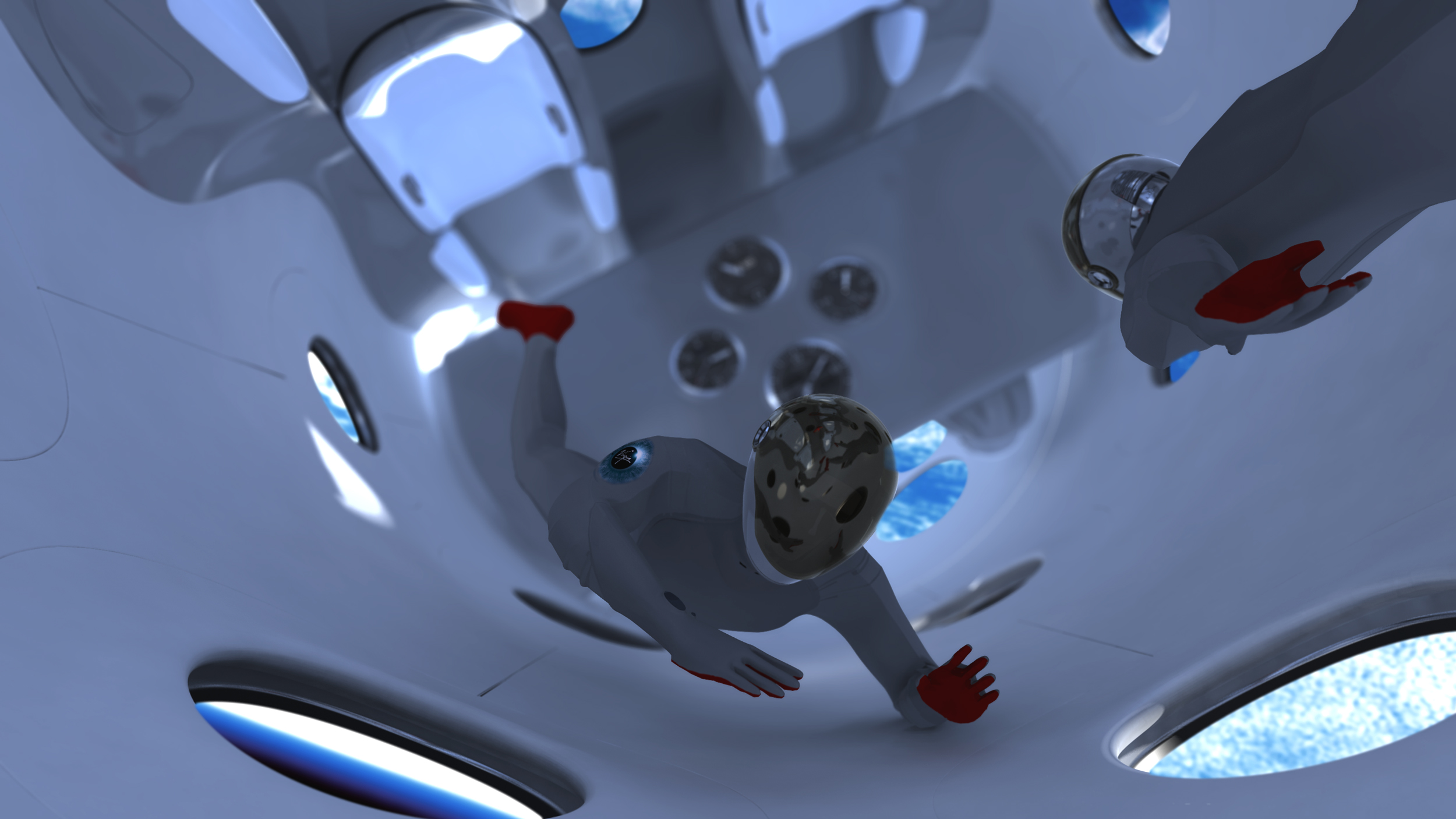 |
| Image Credit: Virgin Galactic. |
 |
| Image Credit: Virgin Galactic |
To check out the latest news on this exciting new development, check out the Virgin Galactic website:
http://www.virgingalactic.com/
Friday, October 22, 2010
CT scans ordered for headaches?
For those who don't know, the CT scanner (Computed Tomography Scanner, or more famously the CAT scanner) is the big donut-shaped device seen in Gray's anatomy or House whenever the doctors have no idea what to do with a patient. It can magically view the insides of a person with great clarity by acquiring x-ray images from multiple angles and computer processing the data to create a salami-thin slice of your gooey insides. Although it is an invaluable tool (imagine hospitals without x-rays, it's practically impossible), the main problem in recent years has been the debate over how often these diagnostic tests should be performed.
Below is a youtube video of what goes on in the scanner as it`s spinning around you (I loved the "patient goes here" caption, hilarious!). It's simply for entertainment purposes.
Now back to the conversation at hand. The only problem is that the x-rays generated are a form of ionizing radiation: electromagnetic energy that can damage living cells and could lead to different forms of cancer. Now, despite sounding like a horror story where everyone will get cancer that undergoes medical imaging, the reality is that the dose of radiation received from a standard chest x-ray is about the same as the dose you get from being outside in the sun all day.
The dosage of radiation received by the CT scanner is a bit more pronounced however; it's the equivalent of getting 200 chest x-rays! And it accumulates, so the more scans you receive over your lifetime, the larger your risk of developing cancer. However, the risks and benefits need to be weighted according to the situation, if you're potentially going to die in the next few minutes from a heart attack, the benefits of getting a diagnostic image far outweigh the small risk of developing cancer 20 years down the road.
The main controversy over the use of these devices is that many physicians are over ordering these tests for minute complaints, such as headaches. A recent paper in the American Journal of Medicine showed that of 623 patients receiving scans for a complaint of headaches, fewer than 2% were found to have any relevant findings on their CT scans. However, there was one patient where the CT image and analysis showed a malignant brain tumor! Something that would be worth catching early on in any case.
What are your thoughts on this issue? Personally I'm quite divided. Being in the medical physics field I'm a huge proponent of medical imaging and it's ability to identify various diseases in patients (like brain tumors), however I think it needs to be used more responsibly on the part of those ordering the tests, many who (at least to the best of my knowledge) seem to have no formal training in the understanding of radiation exposure risks associated with medical imaging.
The paper from the American Journal of Medicine can be found here:
http://www.amjmed.com/article/S0002-9343%2810%2900754-0/abstract
Below is a youtube video of what goes on in the scanner as it`s spinning around you (I loved the "patient goes here" caption, hilarious!). It's simply for entertainment purposes.
Now back to the conversation at hand. The only problem is that the x-rays generated are a form of ionizing radiation: electromagnetic energy that can damage living cells and could lead to different forms of cancer. Now, despite sounding like a horror story where everyone will get cancer that undergoes medical imaging, the reality is that the dose of radiation received from a standard chest x-ray is about the same as the dose you get from being outside in the sun all day.
The dosage of radiation received by the CT scanner is a bit more pronounced however; it's the equivalent of getting 200 chest x-rays! And it accumulates, so the more scans you receive over your lifetime, the larger your risk of developing cancer. However, the risks and benefits need to be weighted according to the situation, if you're potentially going to die in the next few minutes from a heart attack, the benefits of getting a diagnostic image far outweigh the small risk of developing cancer 20 years down the road.
The main controversy over the use of these devices is that many physicians are over ordering these tests for minute complaints, such as headaches. A recent paper in the American Journal of Medicine showed that of 623 patients receiving scans for a complaint of headaches, fewer than 2% were found to have any relevant findings on their CT scans. However, there was one patient where the CT image and analysis showed a malignant brain tumor! Something that would be worth catching early on in any case.
What are your thoughts on this issue? Personally I'm quite divided. Being in the medical physics field I'm a huge proponent of medical imaging and it's ability to identify various diseases in patients (like brain tumors), however I think it needs to be used more responsibly on the part of those ordering the tests, many who (at least to the best of my knowledge) seem to have no formal training in the understanding of radiation exposure risks associated with medical imaging.
The paper from the American Journal of Medicine can be found here:
http://www.amjmed.com/article/S0002-9343%2810%2900754-0/abstract
Water on the moon!
Now this one is just simply awesome.
NASA recently published several research papers on an experiment they conducted in 2009. The experiment consisted of bombarding moon craters and detecting the debris that was released from the impact using LCROSS (the Lunar Crater Observation and Sensing Satellite). Spectrometers, radiometers, and several cameras were used to detect the presence of chemicals within the debris. What they found? water vapor, hydroxyl radicals (that nasty stuff that tends to damage human DNA), sulfur compounds, CO2, and various hydrocarbons. The satellite was even able to estimate the amount of water that was present in the ejection, nearly 155kg!
Now, before anyone jumps for joy and starts fantasizing about moon colonies and moon vacations to moon beaches, recall that the vast majority of that water is in the form of ice. Even when measured by LCROSS it was in the form of water vapour, not the familiar liquid we're used to. The NASA team conducting the experiment are saying however that around 11-12 gallons could be extracted from about 1 tonne of moon rock! That's a substantial amount, especially for visiting astronaughts.
It's interesting to note that frost-like water is not distributed equally but in "oases" across various parts of the moon, leading to the hypothesis that this is actually ancient water brought by asteroids or comets.
At that quantity of water though, one can't help but think of a moon resource-extraction colony supplying space travelers on their way to far off planets; to even think that in the next 10 years we could have dedicated structures operating on the moon makes one feel giddy. At worst the drill operations would simply break through the moon causing havoc for the people of earth, not unlike that god-awful remake of H.G. Wells' The Time Machine.
Here is the link to the various scientific papers discussing the findings:
http://www.sciencemag.org/cgi/content/abstract/330/6003/463
NASA recently published several research papers on an experiment they conducted in 2009. The experiment consisted of bombarding moon craters and detecting the debris that was released from the impact using LCROSS (the Lunar Crater Observation and Sensing Satellite). Spectrometers, radiometers, and several cameras were used to detect the presence of chemicals within the debris. What they found? water vapor, hydroxyl radicals (that nasty stuff that tends to damage human DNA), sulfur compounds, CO2, and various hydrocarbons. The satellite was even able to estimate the amount of water that was present in the ejection, nearly 155kg!
Now, before anyone jumps for joy and starts fantasizing about moon colonies and moon vacations to moon beaches, recall that the vast majority of that water is in the form of ice. Even when measured by LCROSS it was in the form of water vapour, not the familiar liquid we're used to. The NASA team conducting the experiment are saying however that around 11-12 gallons could be extracted from about 1 tonne of moon rock! That's a substantial amount, especially for visiting astronaughts.
It's interesting to note that frost-like water is not distributed equally but in "oases" across various parts of the moon, leading to the hypothesis that this is actually ancient water brought by asteroids or comets.
At that quantity of water though, one can't help but think of a moon resource-extraction colony supplying space travelers on their way to far off planets; to even think that in the next 10 years we could have dedicated structures operating on the moon makes one feel giddy. At worst the drill operations would simply break through the moon causing havoc for the people of earth, not unlike that god-awful remake of H.G. Wells' The Time Machine.
Here is the link to the various scientific papers discussing the findings:
http://www.sciencemag.org/cgi/content/abstract/330/6003/463
Subscribe to:
Posts (Atom)